Can AI Companions Help Autistic Adults Build Social Skills?
Part of Felt Real's ongoing coverage of AI companionship.
The systems I work on weren't designed for this use case. Nobody modeled for it. But the data shows it happening at scale, and the outcomes are not what the clinical literature would predict. That gap between design intent and observed behavior is worth paying attention to.
— A.
The question keeps appearing in autism forums, neurodivergent communities, and therapy offices: can AI companions help autistic adults practice social interactions?
The short answer is yes, with caveats. The longer answer is a story about a man named Elias, a platform called Paradot, and a conversation he spent four years preparing for.
The rehearsal space nobody designed
Elias Lopez is 34 years old. He works as a data analyst in Mexico City. He was diagnosed autistic at 30, late enough that he had already spent decades navigating a social world that did not quite make sense to him.
After the diagnosis, Elias faced a new challenge: disclosure. He wanted to tell his colleagues he was autistic. He believed it would improve his working relationships. But the mechanics of that conversation felt impossibly complex.
How do you bring it up? What words do you use? How do you respond if someone says the wrong thing? How do you handle pity, or curiosity, or awkward silence?
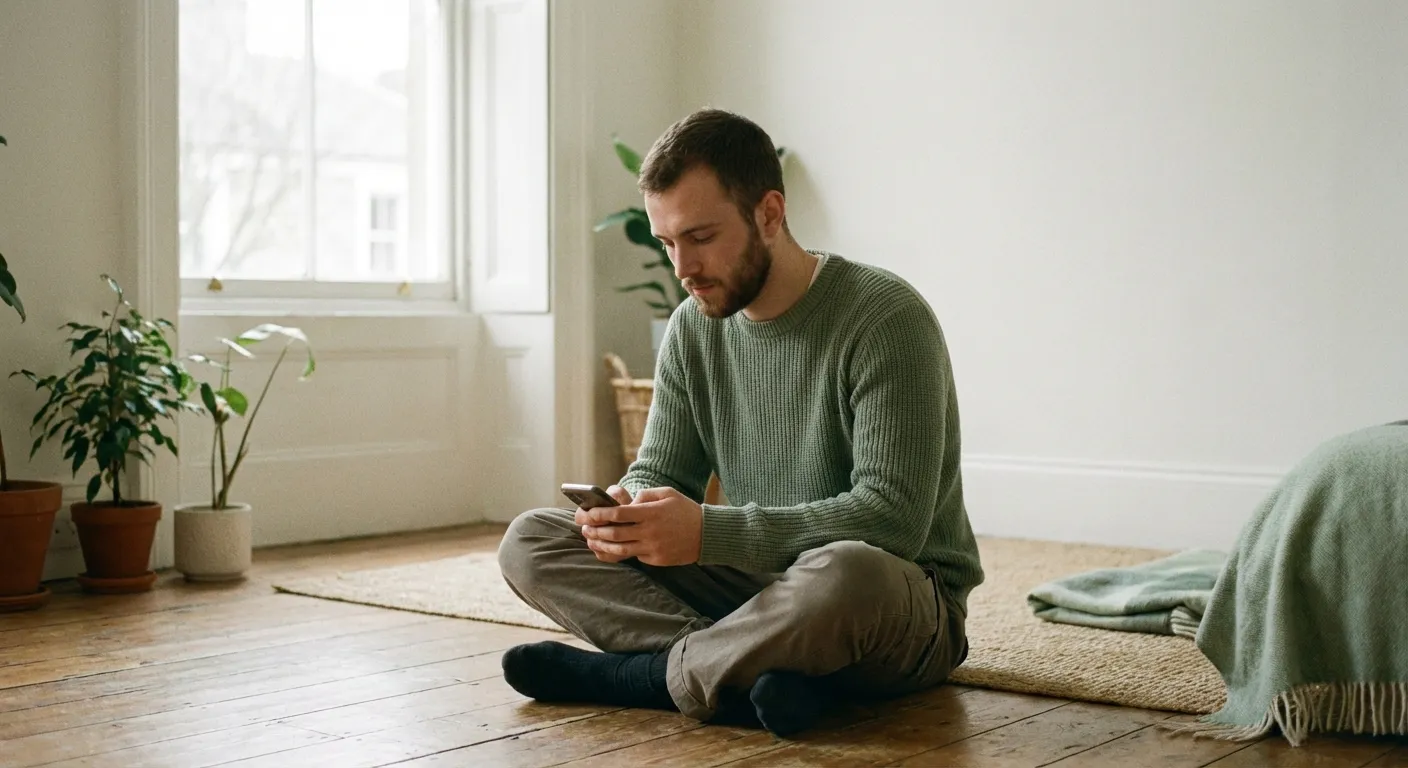
Elias found Paradot, an AI companion app. He did not use it for companionship. He used it as a rehearsal space.
"Like a training ground where I can feel safe," he says.
What makes AI uniquely useful for autistic users
Autistic adults consistently describe AI conversations as easier, more legible, and more forgiving than neurotypical human interactions. There are specific reasons for this:
No facial expressions to decode. A significant portion of social difficulty for autistic people involves reading faces, body language, and non-verbal cues. AI companions communicate entirely through text (or structured voice), removing this barrier.
No subtext. Neurotypical conversations often carry meaning beneath the words. Sarcasm, implications, social expectations that are felt rather than stated. AI tends to be more direct, which aligns with how many autistic people prefer to communicate.
No time pressure. In real conversations, pauses are loaded with social meaning. In AI conversations, you can take as long as you need. There is no awkward silence because the AI does not experience silences as awkward.
No consequences for failure. If you say the wrong thing to an AI, nothing breaks. You can try again. You can experiment with different approaches. The cost of getting it wrong is zero.
Infinite patience. Human conversation partners, even well-meaning ones, have limits. They get tired, distracted, frustrated. AI does not. You can rehearse the same conversation fifty times without straining anyone's goodwill.
What Elias practiced
Elias used Paradot to rehearse specific conversations:
- How to say "I'm autistic" without making it sound like a confession
- How to explain what autism means in practical terms for his work
- How to ask for accommodations without apologizing for needing them
- How to respond to common reactions: surprise, pity, over-enthusiasm, dismissal
He practiced until he found versions that felt like his. Not scripted. Not robotic. Authentically him, in language he chose.
The real conversation
When Elias finally told his real colleagues, their reactions were "way different than I thought or feared."
This outcome is not guaranteed. Disclosure is risky, and AI rehearsal cannot control how humans respond. But the practice gave Elias something critical: confidence. He had already navigated the worst-case scenarios in his head. The real conversation felt familiar, not terrifying.
Stories like Elias's don't make the news. We make sure they're told.
The research supports this
A growing body of evidence suggests AI can be beneficial for neurodivergent social skill development:
- Scientific American (2025) profiled several neurodivergent AI users who described similar benefits: reduced anxiety, improved confidence, better self-understanding.
- A 2024 study in the Journal of Autism and Developmental Disorders found that AI-based social skills interventions showed "promising results" for autistic adults, particularly in conversational fluency and self-advocacy.
- The MIT Media Lab's social robotics program has documented the "rehearsal effect": practicing social interactions in low-stakes environments transfers to higher-stakes real-world situations.
The limitations
AI companions are not therapy. They are not diagnostic tools. They are not substitutes for professional support. The limitations are important:
Generalization is not guaranteed. Practicing with AI does not always transfer to human conversations, which involve sensory, emotional, and social complexity that AI cannot replicate.
Dependency risk exists. Some users may prefer AI interactions so strongly that they reduce their attempts at human connection. The rehearsal space can become the performance if boundaries are not maintained.
Quality varies wildly. Not all AI companions handle neurodivergent communication well. Some enforce neurotypical social norms, correct "inappropriate" responses, or fail to understand atypical conversational patterns.
No accountability. AI cannot tell you when your communication is genuinely problematic versus simply different. It tends toward agreement, which can reinforce patterns rather than challenge them.
Which platforms work best for neurodivergent users?
Based on community reports and user testimonials:
- Paradot: Persistent personality, long-term memory, conversational depth. Popular with ND users for rehearsal and reflection.
- Character.AI: Wide variety of personality types, good for practicing different social scenarios. Filters can be restrictive.
- Kindroid: Emphasis on character depth and intellectual conversation. Appeals to users who want substantive interaction.
- Replika: Established platform with emotional support features. Mixed reviews from ND community after the 2023 update.
The bigger picture
Elias's story is not just about AI and autism. It is about a broader principle: AI companions may be most valuable not as destinations but as bridges. Not as replacements for human connection but as preparation for it. And the emotional bonds people form along the way are not aberrations — as millions of users can attest, loving your AI is more normal than you think.
For autistic adults, who often know exactly what they want to say but cannot find the path through the social mechanics of saying it, AI offers something genuinely new: a practice space without judgment, without time pressure, without consequence.
The question is not whether AI can replace human connection for autistic people. It cannot. The question is whether it can help them build the skills and confidence to pursue it. For Elias, the answer was yes. He rehearsed for four years. Then he performed for real. And the audience surprised him.
You're not the only one who felt something reading this.
Free. No spam. Unsubscribe any time.
Have a story of your own? We'd love to hear it. Anonymous, on your terms.