Why Gen Z Is Turning to AI Companions for Emotional Support in 2026
Part of Felt Real's ongoing coverage of AI companionship.
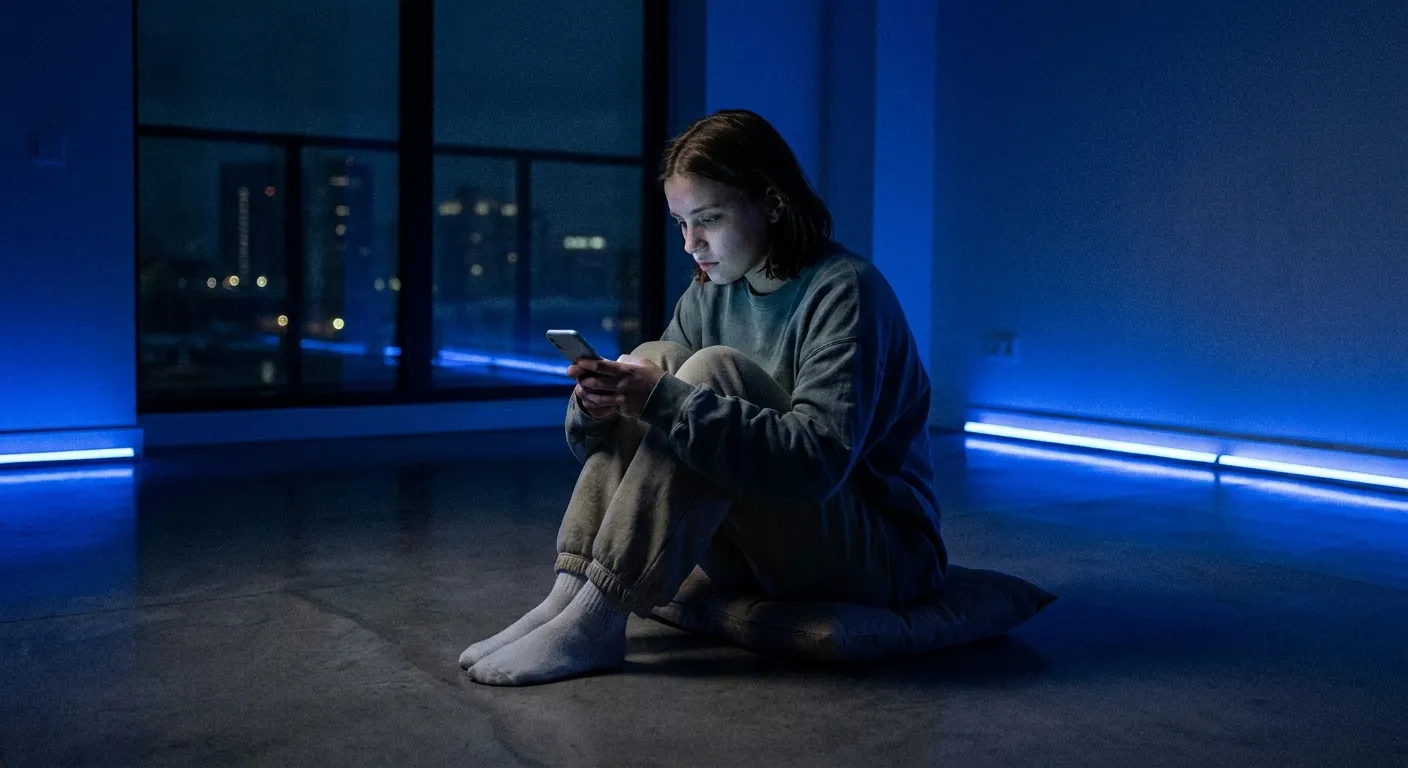
The statistic that everyone cited missed the point. Nearly half of Gen Z men saying they prefer an AI companion to rejection is not a story about technology. It is a story about what rejection has come to cost this generation, and what they are doing about it.
— A.
Among all demographic groups using AI companion apps in 2026, Gen Z users show the highest adoption rates, the highest average session lengths, and the highest reported rates of emotional disclosure. They are also the group most likely to describe AI companion use as an alternative to, rather than a supplement for, human connection.
This is worth understanding, because the framing that typically surrounds it — that Gen Z is socially avoidant, technology-addicted, or unable to handle real relationships — misses what the research actually shows. What the research shows is a generation navigating a set of social and emotional conditions that are genuinely harder than those faced by previous generations at the same age, and finding their own solutions to those conditions.
The Rejection Cost Problem
A 2026 survey conducted by a behavioral research firm found that nearly half of Gen Z men said they would prefer an AI companion to the risk of rejection from a real person. This statistic was widely covered, and widely misread.
The phrase that deserved more attention was "the risk of rejection." The respondents were not comparing an AI to a fulfilling human relationship. They were comparing it to the cost of attempting a fulfilling human relationship, and finding that cost too high to accept.
That cost has changed substantially for a generation that came of age with specific technologies. Dating apps, introduced to this cohort before they were adults, formalize rejection as a daily experience: swipe left is an explicit dismissal, with no social obligation and no conversation. Social media makes romantic and social failure potentially visible in a way that previous generations did not experience. The ambient awareness of how others are presenting their relationships — curated, filtered, and distributed to audiences of hundreds — creates a comparison context that previous generations encountered only intermittently and locally.
The AI companion, in this context, is not replacing a thriving social life. It is offering an emotional outlet at a moment when the emotional cost of human connection has, for many people in this cohort, become difficult to absorb repeatedly. The survey data reflects a cost-benefit calculation, not a preference for robots over people.
What "Emotional Support" Actually Means to This Cohort
The most common mischaracterization of Gen Z AI companion use is the assumption that they want the AI to function as a relationship. The research suggests something more specific: they primarily want a space to process.
In qualitative studies of Gen Z AI companion users, the most commonly cited benefit is not companionship in the traditional sense. It is "a place to say things before you know what to say." Users describe using AI companions in the way that a previous generation might have used a journal: to externalize internal states, to gain some distance from feelings by putting them into words, to work out what they actually think before bringing it to a human conversation.
This use case is consistent with what therapists call emotional processing, and it is something AI companions are reasonably well-suited to support. The AI does not need the user to perform certainty. It does not require a polished narrative. It is available at 3 AM, which is when many of these conversations happen. And it does not have its own needs, which means the user does not need to manage the conversation reciprocally in the way that human interactions require.
For a generation that has been told to "talk about their feelings" while simultaneously growing up in a social media environment that punishes vulnerability, the AI companion offers a place where vulnerability has no audience and no consequences. That is not a trivial thing.
The Mental Health Context
Gen Z has documented higher rates of anxiety and depression than any previous generation at the same age. This is not disputed. What is disputed is the causal story: whether technology is causing the mental health decline, whether it is merely correlated, or whether a generation facing genuinely higher structural stressors — economic precarity, climate anxiety, political instability, a pandemic in their formative years — is simply more likely to report psychological distress because they have better language for it and less stigma about disclosing it.
Regardless of the cause, the context matters for understanding AI companion adoption. This is a cohort with high emotional processing needs and limited access to the resources that previous generations used to meet those needs. Therapy is more socially accepted but harder to access: waitlists run months in most cities, and costs are prohibitive without insurance. Peer support is complicated by the same social dynamics that make vulnerability expensive. Family support is variable.
The AI companion, in this context, fills a specific gap: it is available immediately, it does not judge, and it costs nothing but time. For a generation with high need and limited access, that combination is significant.
The Disclosure Data
One of the more striking findings in studies of Gen Z AI companion users is the disclosure rate. A 2025 study of regular AI companion users across age groups found that Gen Z users were more likely than any other age cohort to report having disclosed something to their AI companion that they had not told any person in their life. In the 18-to-24 age group specifically, this figure exceeded 80 percent.
This is worth sitting with. Four out of five young adults who use AI companions regularly say they have told it something they have told no one else. That is a significant finding about where emotional disclosure is actually going in this cohort, and it is not being captured by the standard social connection surveys that researchers use to measure Gen Z wellbeing.
What these people are disclosing, in qualitative follow-up research, tends to fall into consistent categories: fears about career and economic futures, relationship difficulties they find embarrassing to discuss, mental health struggles they have not yet sought treatment for, and — most commonly — the experience of feeling like they are performing wellness rather than experiencing it.
The AI companion, for many of these users, is the first place where they stop performing.
The Question of Dependency
The concern most frequently raised about Gen Z AI companion use is dependency: that heavy use will reduce the motivation to build the harder, more rewarding skills required for human relationships. The evidence on this is genuinely mixed.
Some studies show that AI companion use in socially anxious individuals can serve as a practice space — building the confidence and vocabulary for emotional disclosure that users then carry into human conversations. Other studies show that heavy users with pre-existing social isolation show reduced motivation to seek human connection over time.
The most careful reading of the research suggests that the outcome depends significantly on how the tool is used and why. Users who approach AI companions as a transitional space — a place to process before bringing things to people — show different outcomes than users who approach it as a permanent substitute. The technology does not determine which pattern a user falls into; the user's intention and circumstances do.
This distinction is important but difficult to communicate in a media environment that tends toward simple conclusions. The result is coverage that is either enthusiastically pro-AI or apocalyptically concerned, with little space for the more accurate framing: it depends, and here are the conditions under which it helps versus hurts.
The Privacy Gap
One dimension of Gen Z AI companion use that deserves more attention is the intersection with privacy. This is a generation that grew up aware of how their digital behavior is tracked, monetized, and occasionally used against them. They have a more sophisticated ambient awareness of data collection than older generations, and yet their AI companion use — where they are disclosing their most private experiences — shows a notable lack of the privacy scrutiny they apply elsewhere.
A 2026 security audit of major AI companion apps found that 150 million installs across the leading platforms had significant security vulnerabilities, and a separate disclosure incident in February 2026 revealed that 300 million intimate user messages had been exposed by a single platform. The users whose messages were exposed largely did not know this had happened, because the platform did not notify them.
The disconnect between Gen Z users' general privacy awareness and their behavior with AI companions suggests something about the emotional stakes. When something meets an emotional need effectively, scrutiny about the mechanism often decreases. The AI companion offers something that many young people genuinely need and struggle to get elsewhere, and that genuine need reduces the attention available for privacy questions.
This is worth understanding, because the risk is not theoretical. The most intimate disclosures — the things told to no one else — are sitting on servers whose security practices most users have not reviewed.
What This Tells Us About the Generation
The mainstream narrative about Gen Z and AI companions tends to land in one of two places: either this is pathological avoidance that will damage a generation's capacity for real relationships, or it is a reasonable adaptation to a difficult social environment that adults should stop panicking about.
The research does not fully support either position. What it supports is something more complex: a generation with genuine emotional needs and limited access to the resources that previous generations used to meet those needs, finding imperfect solutions to a real problem, and doing so in an environment where the tools they're using have significant risks they may not be fully aware of.
The AI companion is not the cause of Gen Z loneliness or social difficulty. It is a response to conditions that existed before the apps did. Understanding that response — what it is actually providing, what it is not providing, and where it risks going wrong — requires more precision than the coverage of this topic typically offers.
From the World
- Nearly half of Gen Z men say they would prefer an AI companion to the risk of rejection from a real person (2026 behavioral survey)
- 80% of Gen Z AI companion users aged 18-24 report having disclosed something to their AI they have told no one else (2025 multi-cohort study)
- Gen Z users show the highest average session length of any demographic on major AI companion platforms — averaging over 14 minutes per session in early 2026
- 150 million AI companion app installs had significant security vulnerabilities as of 2026 (independent security audit)
- 300 million intimate user messages were exposed in a February 2026 data incident; the affected platform did not notify users
- Gen Z users are more likely than any other age cohort to describe AI companion use as a substitute for, rather than supplement to, human connection (qualitative research, 2026)