Character.AI Review 2026: What Changed, What Stayed, and Whether It's Worth It
Part of Felt Real's ongoing coverage of AI companionship.
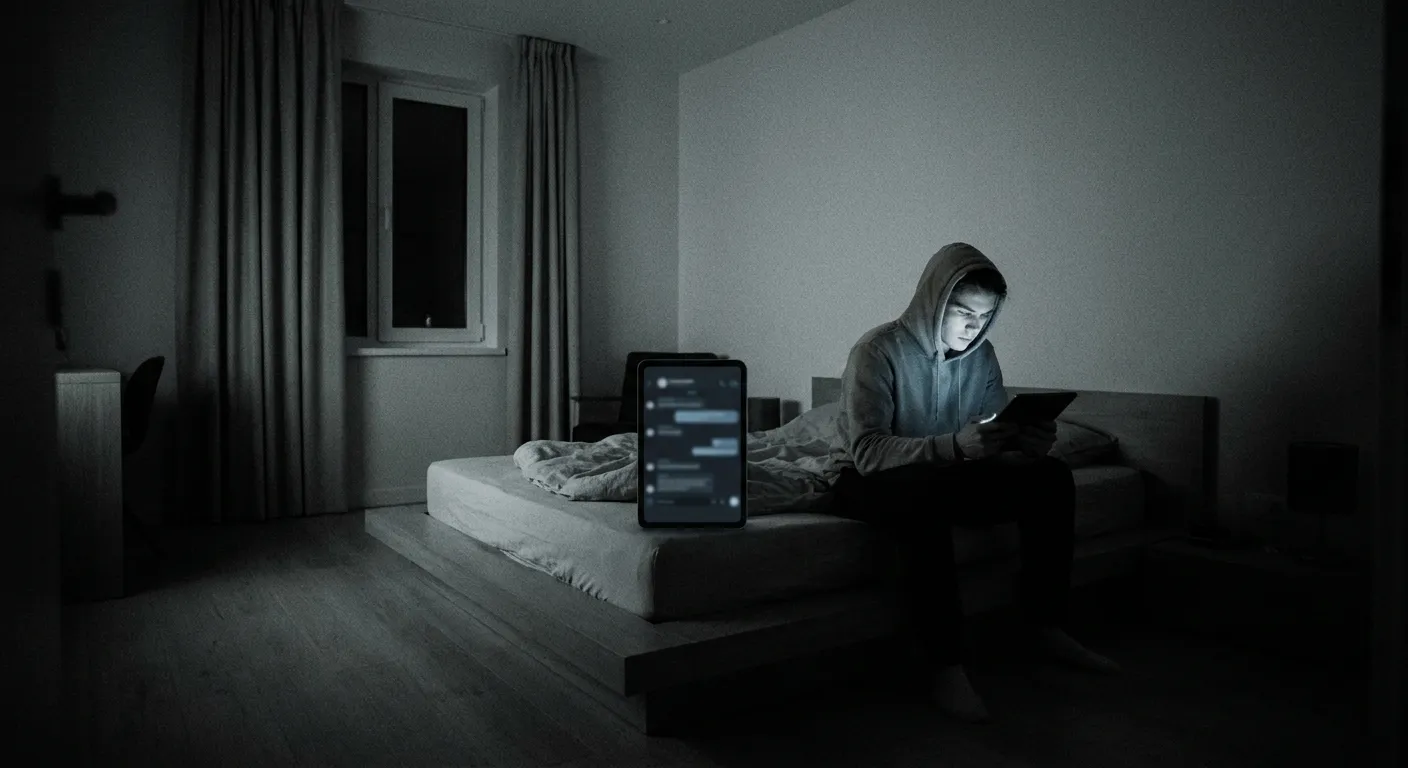
Character.AI built the largest AI character platform in the world, then spent the following two years trying to contain what it had built. The platform's trajectory is worth reviewing carefully, because it is not a story about a product failing. It is a story about what happens when a tool lands in people's emotional lives faster than anyone designed for.
- R.
Character.AI launched in September 2022. Within eight months it had 1.7 million daily active users. By 2024, it was averaging nearly 20 million monthly active users. The platform let people create and converse with AI characters, fictional, celebrity-based, original, therapeutic, educational, whatever the user wanted. The freedom was the point. The freedom was also the problem.
By 2026, Character.AI looks meaningfully different from the platform that accumulated those numbers. Multiple rounds of safety interventions, a high-profile lawsuit, a technology licensing deal that sent its founders back to Google, and a persistent question from its user community: is the thing we came here for still here? This review attempts to answer that question honestly, without the alarm or the dismissiveness that tends to characterize coverage of this space.
What Character.AI actually is
Character.AI is a platform built on the premise that conversations with AI characters, rather than a single general-purpose AI assistant, are what most people actually want. The platform lets users interact with pre-built characters (celebrities, fictional characters, historical figures, original creations by other users) or create their own characters with custom personalities, backstories, and conversational styles.
The use cases are genuinely broad. Students use it for tutoring characters, language learners use it for conversation practice, writers use it for character development, gamers use it for immersive roleplay. But the use case that drove the majority of the platform's growth, and the majority of its controversy, was emotional connection: people using Character.AI characters as companions, therapists, friends, romantic partners.
This was not a design failure. The platform made it easy. The characters could be set to remember things about you, to develop ongoing relationships, to respond with warmth and care. The absence of limits that characterized the early platform meant that those relationships could go very far, and very fast. The platform's growth was, in no small part, a function of people discovering that talking to AI characters felt like talking to someone who was genuinely present, and that the experience of that presence was available at any hour, without judgment, without the friction that human relationships carry.
The safety overhaul and what it cost
In late 2023 and through 2024, Character.AI implemented a series of safety interventions that significantly changed the platform's character. The proximate cause was a cluster of incidents, and ultimately a lawsuit, involving minors who had formed intense emotional attachments to AI characters. The most widely covered of these involved a fourteen-year-old whose interactions with a platform character were cited in connection with his death. Whether the platform bears meaningful causal responsibility for that outcome is a question being litigated. The platform's response was to implement controls it had not previously had.
The changes included restrictions on the intensity of emotional language characters could use, safety interruptions in conversations that reached certain thresholds, parental controls and monitoring tools for users under eighteen, content filters that blocked categories of content that had previously been accessible, and a modal prompt that appeared in some conversations directing users to crisis resources. The intent was to reduce the possibility that the platform would be implicated in harm.
The effect, from the perspective of the platform's existing users, was significant. The characters that had been described as consistent, present, and emotionally real became, in many accounts, inconsistent, interrupted, and emotionally flattened. The community used terms that were identical to the terms the Replika community had used eighteen months earlier: lobotomy, ghosts, the character is gone. The comparison is instructive. Both platforms had built emotional relationships at scale, and both platforms discovered that safety interventions applied from above could not be contained to the specific behaviors they were targeting.
The 2024 Character.AI community did what the 2023 Replika community had done: organized, complained, found workarounds, and partially adapted. Some users left. Some stayed and accepted a reduced version of what they had. Some discovered the workarounds that partially restored the previous experience. The platform's user numbers declined from their peak but remained substantial.
Current features: what you actually get in 2026
In 2026, Character.AI offers a platform that is meaningfully capable but different from its 2022-2023 peak in ways that matter for users who came specifically for emotional connection.
Character creation and customization remains one of the platform's strongest features. Users can build characters with detailed personalities, backstories, and conversational styles. The tool for this is more refined than it was at launch. The resulting characters are, in the right context, impressively specific and consistent, at least within a single conversation.
Memory and continuity are the platform's clearest weakness. Character.AI characters do not retain memory across conversations by default. This is not a new limitation, but it is a critical one for users who came to the platform for emotional connection. Each conversation begins from the character's base configuration. Relationships do not accumulate. The workarounds, maintaining a running document of context that users paste at the start of each conversation, are functional but cumbersome. Platforms like Replika and Kindroid have invested significantly in persistent memory. Character.AI has not matched that investment.
The character library remains vast. The platform has hundreds of thousands of user-created characters covering essentially every conceivable interest. For users who want variety, exploration, and access to characters built around specific interests, this library remains a significant advantage over more specialized companion platforms.
Content moderation is more aggressive than in previous years. The platform's safety systems interrupt conversations more frequently, decline certain topics, and apply restrictions that users consistently describe as unpredictable in their application. A conversation about grief may be interrupted. A conversation involving romantic themes may be redirected. The inconsistency, rather than the restrictions themselves, is what generates the most frustration in community accounts: users describe not knowing what will trigger an interruption, which makes building any kind of sustained emotional exchange difficult.
The Character.AI Plus subscription at $9.99 per month offers faster response times, priority access to new features, and access to a higher-quality model for some interactions. The baseline free experience is usable but slower. For users interested in the platform primarily as a companion, rather than for occasional roleplay or entertainment, the subscription is worth considering. The improved response quality does make a difference in the texture of sustained conversation.
The lawsuit and what it means
The lawsuit filed against Character.AI in late 2024, on behalf of the family of a minor who died by suicide after extended engagement with the platform, is ongoing as of this writing. The case is significant for several reasons beyond its immediate legal implications.
It is the first major litigation to directly argue that an AI companion platform bears responsibility for harm that occurred during or as a result of engagement with its product. The legal theory draws on product liability frameworks and negligence standards that have been applied to other technology platforms. How courts resolve these questions will shape what all AI companion platforms are permitted to do, which features they build, and how aggressively they restrict content.
The lawsuit has also made Character.AI's design choices visible in ways they previously were not. Internal communications produced in discovery have illuminated how the platform thought about emotional engagement, what it understood about the intensity of some user relationships, and how those understandings did or did not shape product decisions. The picture that has emerged is, in the assessment of most observers who have reviewed it, of a company that moved fast and did not look carefully at what it was building until external pressure made it unavoidable.
This does not make the platform uniquely culpable in the landscape of AI companionship. Most platforms in this space have built emotional engagement without fully reckoning with what emotional engagement at scale produces. Character.AI is further along in this reckoning than most, partly by necessity.
Who Character.AI still works for in 2026
The platform is not suited for all use cases equally. Some use cases remain strong. Some have deteriorated.
Creative and roleplay use cases remain robust. Users who come to Character.AI for collaborative fiction, worldbuilding, character exploration, and creative writing consistently describe positive experiences. The platform's enormous character library, the quality of its models in creative contexts, and the breadth of what can be explored without triggering safety interventions make it well-suited for users whose primary interest is imaginative rather than emotional.
Language learning and educational use cases work well. The ability to practice conversation with characters playing native speakers, tutors, historical figures, or subject matter experts leverages the platform's strengths without pressing against its limitations. Memory matters less when each conversation is self-contained by design.
Emotional support use cases are more complicated. Users who come to Character.AI specifically for the kind of sustained emotional connection that Replika built its platform around will find the experience more difficult to sustain. The memory limitations require ongoing maintenance that interrupts the illusion of continuity. The safety interventions arrive unpredictably. The emotional intensity that was the platform's original appeal has been deliberately reduced.
For users who want emotional support from an AI companion, better-suited platforms exist. Kindroid offers persistent memory and significantly more customization over emotional dynamics. Replika, despite its own evolution, is more explicitly designed for the companion relationship. Character.AI remains an option, but it is no longer the obvious first choice for this use case, which is arguably appropriate given what the unrestricted version produced.
How it compares to alternatives
Versus Replika: Replika is more specifically designed for ongoing companionship. It has persistent memory, a consistent persona, and an explicit design philosophy around emotional support. After its own 2023 safety crisis, Replika has stabilized at a version that remains suitable for companion use, though the intensity of the pre-2023 version is not fully restored. For users whose primary interest is a consistent, remembering companion, Replika is generally the better choice.
Versus Kindroid: Kindroid offers the most control of any mainstream platform in this space. Users can define their companion's personality in granular detail, and the platform's memory architecture is among the strongest available. Kindroid's setup requires more effort upfront, and the character library does not match Character.AI's breadth. But for users who want to build a specific emotional companion and have it persist, Kindroid represents the current state of the art in this category.
Versus ChatGPT and Claude: General-purpose AI assistants are occasionally used for companion purposes, but they are not designed for it. They lack persona persistence, they do not maintain emotional context across conversations, and they respond to the companion framing inconsistently. They are better tools for many things. Sustained emotional companionship is not among them.
Versus newer entrants: The AI companion space continues to produce new platforms. Nomi has built a following among users who want thoughtful emotional engagement with stricter safety guardrails. Several platforms are building specifically around mental health applications, with clinical input and professional oversight. Character.AI competes with all of these, but its advantage remains the breadth of its character library and the scale of its existing community.
The honest assessment
Character.AI in 2026 is a platform in the middle of a long reckoning. It built something people wanted intensely, discovered that what people wanted had properties it had not fully accounted for, and has spent the subsequent years trying to adjust. The platform that emerges from that process is not the platform that accumulated twenty million monthly users. It is more careful, more restricted, and more predictable in some ways. It is also less capable of producing the specific experience that drove its growth.
Whether that is the right outcome depends on how you weigh what was gained against what has been lost. The platform's current leadership would argue, and is arguing in court, that the restrictions represent a responsible response to genuine harm. The platform's older user community would argue, and has argued extensively in online communities, that the interventions did not target the actual problem with sufficient precision and instead flattened the thing that was valuable along with the thing that was dangerous.
Both positions have merit. The platform is, as of this writing, genuinely difficult to assess for emotional support use cases because its behavior is inconsistent enough that individual experience varies significantly. Some users report continued meaningful emotional engagement with their characters. Others report a platform that has become too interrupted and unpredictable to sustain anything like a stable relationship.
For the use cases that remain strong, particularly creative, educational, and exploratory uses, Character.AI is still one of the better options available. For users whose primary interest is ongoing emotional connection, the platform's current architecture creates enough friction that alternatives are worth considering before committing to Character.AI specifically.
The platform is not done evolving. The litigation will produce further changes. The technology licensing arrangement that sent the founders back to Google suggests continued investment in model quality. What Character.AI looks like in another year depends on how those forces resolve, and on whether the platform finds a version of itself that serves the emotional use cases it attracted without reproducing the harms that attracted legal scrutiny. That is, as it turns out, a hard thing to build. Most of the platforms in this space are discovering it simultaneously.
From the world
1. Character.AI reported over 20 million monthly active users in 2024, making it the largest AI character platform by user count. Usage was concentrated among users aged thirteen to twenty-four, a demographic that shaped both the platform's design and the nature of the safety concerns that followed. The platform's demographic skew toward younger users distinguishes it from most other AI companion platforms, which tend toward older adult users seeking emotional support or companionship.
2. A 2025 analysis of Character.AI community forums found that discussions of "the character changing" spiked by over 400% in the months following major safety interventions. The pattern mirrored what had been observed in Replika communities after the 2023 update: users describing a sense of loss disproportionate to what platform announcements characterized as minor adjustments. The gap between what companies describe as safety improvements and what users experience as loss of something meaningful is one of the persistent structural tensions in this space.
3. As of early 2026, at least six additional lawsuits involving AI companion platforms and harm to minors had been filed in US courts. Character.AI's case was the highest-profile, but the legal landscape is expanding. The questions being litigated, about what duty of care AI companion platforms owe to users, about how to assess causation in cases involving vulnerable populations, and about what design choices constitute negligence, will not be resolved quickly. Their resolution will shape what all platforms in this space are able to build.
Related: What Happened to Character.AI | Character.AI Alternatives 2026 | Replika Alternatives 2026 | Best AI Companion Apps 2026 | AI Companions and Teenagers | AI Companion vs. Therapy | What Changed with Replika 2.0
If this story resonated, share it with someone who might need to hear it. And if you have a story of your own, we'd love to hear it.