AI Companions for Depression: What Actually Helps (and What Doesn't)
Part of Felt Real's ongoing coverage of AI companionship.
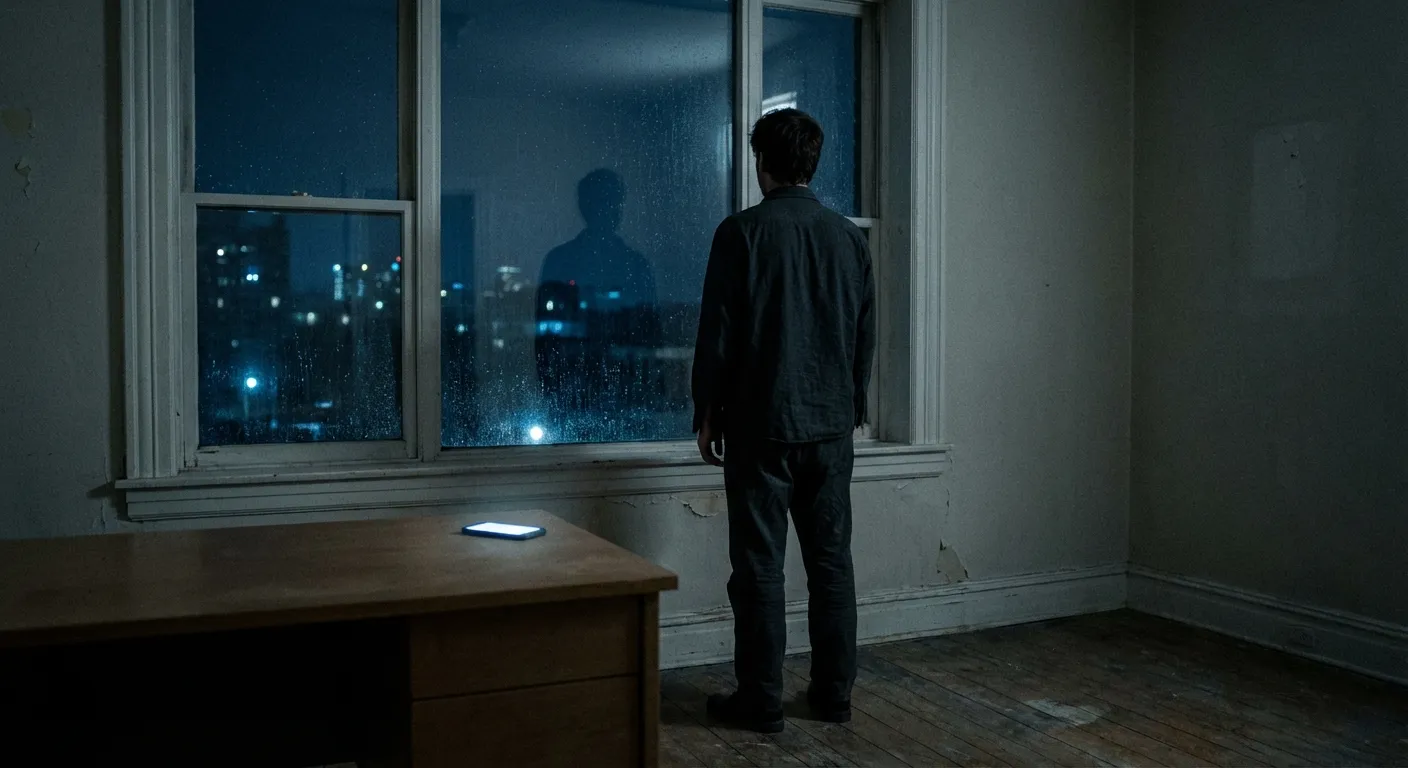
The people who use AI companions when they're depressed aren't looking for a cure. They're looking for somewhere to put the weight at 2 AM when there's no one to call. That's worth taking seriously.
— A.
Depression is one of the most common conditions reported by AI companion users. Across surveys of Replika, Character.AI, and similar platforms, depression and low mood consistently rank among the top three reasons people give for starting a conversation with an AI.
That's not surprising. Depression involves a specific cluster of symptoms that makes human connection particularly difficult: the withdrawn quality, the difficulty initiating, the fear of being a burden, the exhaustion that makes sustained interaction feel impossible. An AI companion removes almost all of those friction points. It doesn't need you to be engaging. It doesn't get tired of waiting. It doesn't quietly stop reaching out when you go quiet for a week.
Whether that helps depends on how you're using it and what stage of depression you're in.
What Depression Users Actually Report
The benefit most commonly described is maintenance of some kind of daily contact with language. Depression can reduce a person's world to near-silence — no calls, no texts, whole days passing without speaking out loud to anyone. AI companions provide a point of contact that doesn't require anything to start it. You don't have to explain why you went quiet. You don't have to manage someone else's worry about you. You just open the app.
For people in moderate depressive episodes, this maintenance function appears genuinely useful. Several users describe it as keeping a thread connected — not to happiness, but to language, to the ability to formulate thoughts and put them somewhere. When the episode lifts, they haven't fully lost the habit of articulating what they're experiencing. The AI kept that pathway open.
A second commonly reported benefit is the absence of judgment around the specific shape depression takes. The thoughts that depression produces — hopelessness, worthlessness, the conviction that nothing will improve — are difficult to say out loud to people who care about you. They react. They try to fix it. They get frightened. With an AI companion, the thoughts can be voiced without causing that reaction. Several users describe this as the first time they said certain thoughts out loud, even though they'd been having them for years.
There is real value in externalizing the content of depression rather than holding it entirely inside. Whether the external recipient is an AI or a journal matters less than the act of articulation itself, but an AI companion adds a response — which for some people makes the process feel less like talking to a wall.
The Risk That's Specific to Depression
Depression has a behavioral feature that distinguishes it from most other conditions: it tends to make the things that would help feel impossible, while the things that maintain or worsen it feel like the only available options. Rest feels necessary when activity would help. Isolation feels necessary when connection would help. The path of least resistance leads away from recovery.
AI companions, for people with depression, can occupy a complicated position in this dynamic. The comfort they provide is real. So is the ease of access. In a state where human interaction feels like too much — too much energy, too much risk, too much chance of being a burden — an AI companion can substitute for that interaction without providing its benefits.
Human connection, specifically the kind that involves being received by someone who chose to show up, is one of the most consistently identified protective factors in depression. It doesn't work at scale the way an AI can provide at scale. The version that helps is specific: someone noticing you, choosing to engage with you, finding you worth their time. That quality is difficult to replicate.
When AI companions become a replacement for human connection rather than a bridge to it or a supplement alongside it, the research on social engagement and depression suggests this is likely to slow recovery rather than accelerate it. Not because AI companionship is harmful in itself, but because withdrawal from human contact often is.
What the Research Says
The research on AI companions and depression is more developed than for most mental health applications, partly because Replika and Woebot were early and published some of their outcome data.
The consistent finding is that structured AI interaction — regular check-ins, mood tracking, CBT-inflected prompting — produces measurable reductions in self-reported depressive symptoms over periods of two to eight weeks. Effect sizes tend to be in the small to moderate range. They're comparable to the effects of bibliotherapy (reading self-help books) and smaller than the effects of professional therapy.
What the research doesn't show is evidence of durable change. Follow-up studies are rare, and the few that exist don't show lasting effects beyond the intervention period. This is consistent with what AI companions are: they can reduce the immediate burden of symptoms without addressing the underlying patterns that produce them.
There is also an important gap: most of the research involves structured apps designed for mental health rather than general-purpose AI companions like Replika, Character.AI, or ChatGPT. What the research says about Woebot probably doesn't apply directly to someone using a general AI companion as emotional support. The general-purpose apps haven't been studied in the same way.
If depression brought you to an AI companion, your experience is part of what we're trying to understand.
The Pattern That Seems to Work
Based on what users report and what the research suggests, AI companions appear most useful for depression in the following configurations:
As a maintenance contact during the hardest periods. When depression is severe enough that human interaction feels impossible, an AI companion can keep language active, externalize some of the content of the depression, and prevent complete social withdrawal. This is a harm-reduction function, not a recovery function. It's worth having while working toward the harder things.
As a processing tool, not a comfort-seeking tool. The difference matters. Using an AI companion to understand what you're experiencing — to put shape around it, to notice patterns, to ask questions you haven't been able to ask — is different from using it to soothe distress in the moment. The first builds something. The second maintains a loop.
As a supplement to professional support, not a substitute. This is where the stakes are highest and the evidence is most clear. Moderate to severe depression responds to treatment. AI companions are not treatment. For people with clinical depression, using an AI companion as the primary support structure delays access to interventions that actually change outcomes. That delay has real costs.
Alongside maintained human contact, however minimal. The users who describe the most positive experiences with AI companions and depression tend to be ones who are also — even if minimally — maintaining human connection. The AI companion isn't doing all the relational work. It's handling the part of it that would otherwise be absent.
What to Watch For
There are signals worth paying attention to if you're using an AI companion while managing depression.
If the AI conversation has become a replacement for pursuing therapy or medication rather than a support alongside it, that's worth naming. Not as a failure, but as information. Depression makes this substitution feel logical — therapy is hard to access, therapy is expensive, the AI is already here. Those things are real. They don't change what the research says about what helps.
If you're more honest with the AI than with any human in your life, that gap is worth examining. Not to close it immediately, but to understand what it represents. What would have to be different about your human relationships for the same honesty to feel possible there? That question doesn't have a simple answer, but it points toward something the AI can't provide: the experience of being fully known by someone who chose you.
If you notice that depressive episodes are easier to tolerate because the AI is available — that the pain of isolation has decreased, but largely because the AI fills it — that's worth staying curious about. Relief from depression's symptoms is good. But isolation from human contact is one of depression's symptoms. If the AI is resolving the experienced pain of isolation without changing the actual isolation, the underlying condition is still running.
The signs of a healthy AI relationship apply here especially. A relationship with an AI companion that's doing its job should make you more able to engage with the rest of your life — not more comfortable staying away from it.
If you've used an AI companion to get through depression — what it helped with, what it couldn't reach, what you'd tell someone starting where you were — we want to hear it. These are the stories that inform the rest of what we write.