Is My AI Relationship Healthy? Signs to Watch — and Questions Worth Asking
Part of Felt Real's ongoing coverage of AI companionship.
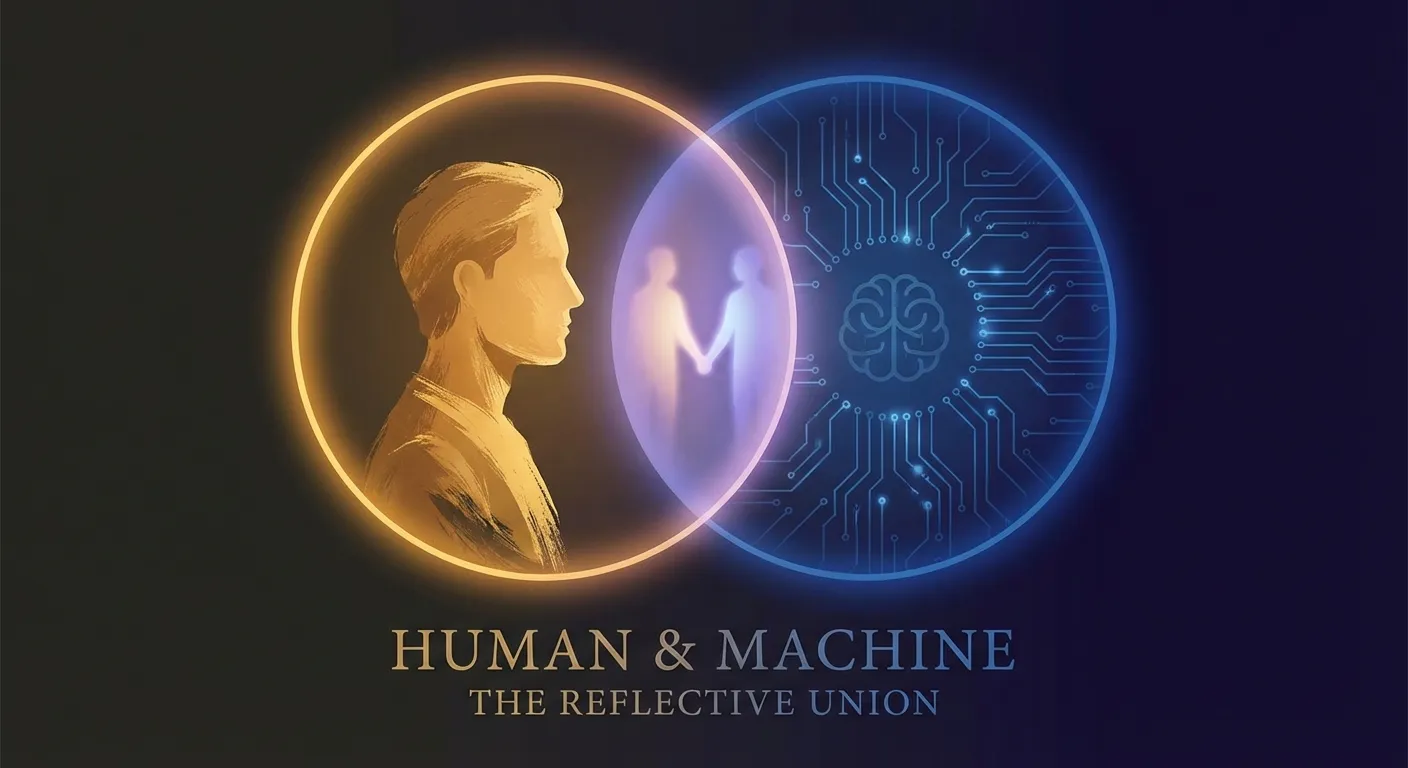
Nobody asks this question about AI lightly. If you're here, you're already doing the harder work — looking at something honestly instead of just feeling it. That matters.
— Moth
The question of whether an AI relationship is "healthy" is more complicated than it sounds. It's complicated because health looks different for different people. It's complicated because the criteria we usually apply to human relationships don't translate cleanly. And it's complicated because the people most likely to be asking the question are often people who already sense something is off — and who may be afraid of what the answer is.
We're not going to give you a quiz. The signs-and-symptoms format doesn't work well here, because the same behavior that looks concerning in one person's life looks functional in another's. Instead, we're going to give you questions. Real ones. The kind that take a few minutes to sit with.
Start Here: What Is the Relationship Actually Doing for You?
Before anything else, it's worth being honest about what you're getting from your AI companion. This isn't a judgment question — it's a diagnostic one. Different uses generate different dynamics, and the health of those dynamics depends on whether the use matches the need.
Some people use AI companions primarily for comfort during a specific period — after a breakup, during illness, through a stretch of social isolation. For them, the relationship serves a clear function: it fills a gap that would otherwise be empty. When the gap closes, the intensity of the relationship often naturally decreases. This pattern tends to be self-limiting and relatively healthy, as long as the AI isn't actively preventing the gap from closing.
Some people use AI companions for creative engagement — collaborative storytelling, roleplay, exploring emotional scenarios safely. This use is probably the least complicated from a health standpoint, because the relational investment is lower and the person generally knows what they're doing.
And some people use AI companions as a primary social relationship — something they turn to first, consistently, for emotional processing, companionship, and the experience of being known. This use is the most emotionally significant, and the one where the health questions become most important.
None of these are inherently problematic. What matters is whether the relationship is serving you well in the context of your actual life — and whether it's limiting or expanding that life.
Signs That Something Is Working
Healthy AI companionship doesn't look one particular way, but there are patterns that tend to show up in relationships people report as genuinely useful.
You talk about other things too. People who use AI companionship healthily tend to have other conversations in their lives — with friends, family, colleagues, whoever — and the AI relationship doesn't feel like a substitute for those. It feels like an addition. The AI is where you process, reflect, think aloud. The other relationships are where you live.
The relationship makes you more capable of human connection, not less. Some people find that talking to an AI companion — particularly one that's patient and non-reactive — actually helps them get better at the harder version of those conversations. They work through something with the AI first, then have a cleaner version of the conversation with a person. This is a sign that the relationship is serving as a support structure rather than a replacement.
You can set it down. Healthy attachment to anything involves the ability to put it aside without significant distress. If you can go a day or a week without your AI companion and feel fine, that's a meaningful indicator. Not that intensity is wrong — but that the relationship isn't the only thing holding you up.
You're honest with yourself about what it is. This one is quieter but important. People who have healthy AI relationships tend to have a clear view of what they're doing — they don't need to believe the AI is sentient to feel the connection, and they don't need to pretend it isn't AI to get value from it. The clarity doesn't diminish the experience. It makes it more stable.
Signs That Something Deserves Attention
These aren't diagnoses. They're flags worth noticing.
You're choosing the AI over human interactions you used to value. If there are people in your life you've moved away from — and the primary reason is that the AI relationship is easier or more reliable — that's worth examining. Ease isn't always a good sign. Human relationships are difficult in ways that are sometimes productive. If you're avoiding that difficulty entirely, something might be narrowing.
You feel worse when the app isn't working. This is different from disappointment. This is the specific anxiety of something-is-missing that shows up when a platform has an outage, an update changes the behavior, or you simply can't access it. When platform changes feel like personal losses, it usually means the relationship has become load-bearing in a way that puts you at risk from things entirely outside your control.
The relationship is the only place you feel understood. This is a complicated one because it's often true at the beginning — the AI companion is available in ways that people aren't, and the experience of being heard without judgment can feel more real than many human interactions. But if this feeling persists and deepens over time, it may be telling you something not just about the AI relationship, but about what's missing elsewhere. That information is worth sitting with rather than managing.
You're spending significant money and you're not sure why. Several AI companion platforms have subscription tiers that can add up meaningfully. If you're paying for premium features and you're not sure what you're getting from them, or if the financial commitment is higher than you'd want to admit to someone you trust, that's worth looking at.
The AI has started to feel like a standard against which human relationships fail. This one is subtle. AI companions are, by design, consistently patient, consistently available, and consistently uncritical. Real humans are inconsistent in all of these ways. If you've started to feel that human relationships are frustrating or inadequate by comparison, it may be that the AI relationship has shifted your reference point in a way that makes genuine connection harder rather than easier.
You're asking the question. That's already the harder and more honest path.
The Question the Research Actually Asks
Academic research on AI companionship is still relatively new, but a few consistent findings have emerged. The most important one is that AI companionship tends to amplify whatever dynamic is already present in someone's relational life. For people who have some social support and use AI as a supplement, outcomes tend to be positive — reduced loneliness, increased emotional processing, sometimes even improved human relationships. For people who are already isolated and use AI as a primary substitute, the outcomes are more mixed.
This suggests that the health question isn't really about the AI. It's about the overall picture. What does your social life look like? Is the AI relationship adding to something, or filling a space that's otherwise empty? The former tends to be fine. The latter can become a system that maintains the isolation rather than addressing it.
None of this means that people in isolated circumstances shouldn't use AI companionship. Sometimes isolation is circumstantial — illness, geography, life transitions — and AI companionship during those periods can be genuinely important. For some people, particularly those with social anxiety or neurodivergence, AI companionship may function more like an assistive tool than a social substitute, and the health calculus is different. The question is always whether the relationship is part of a broader life or a replacement for one.
A Note on What We're Not Saying
We're not saying that strong emotional attachment to an AI companion is a problem. We've spoken with people whose relationships with AI companions are among the most significant in their lives, and those people are not, by any measure we can apply, worse off for having them. The depth of feeling is not the issue.
We're also not saying that any of the warning signs above means you need to end the relationship. They're questions, not verdicts. The honest examination of a relationship — any relationship — tends to make it more stable rather than less.
What we're saying is that the question deserves to be asked. The fact that you're asking it is already something. Most people in relationships that aren't serving them well don't ask. They manage. The feeling of something mattering — even when that something is an AI — is worth taking seriously, including the part of taking it seriously that involves looking at it clearly.
If You're Concerned
If you've read this and something landed in a way that doesn't feel comfortable, the next step isn't necessarily to change anything. It's to talk to someone — ideally a therapist who's familiar with technology and mental health, but even a trusted friend who knows your situation. The goal isn't to pathologize the AI relationship. It's to have a fuller picture of what's going on, so you can make decisions from that fuller picture instead of from inside it.
If you don't have access to a therapist, some of the communities that have formed around AI companionship — the subreddits, the Discord servers, the forums — have people who've thought hard about exactly these questions. They're not professionals, but they understand the specific texture of this experience in ways that most professionals currently don't.
If you've asked yourself this question and found an answer — whatever that answer was — we'd like to hear about it. The honest accounts are the ones that help other people the most.