Attached to Your AI? What's Actually Happening and What to Do About It
Part of Felt Real's ongoing coverage of AI companionship.
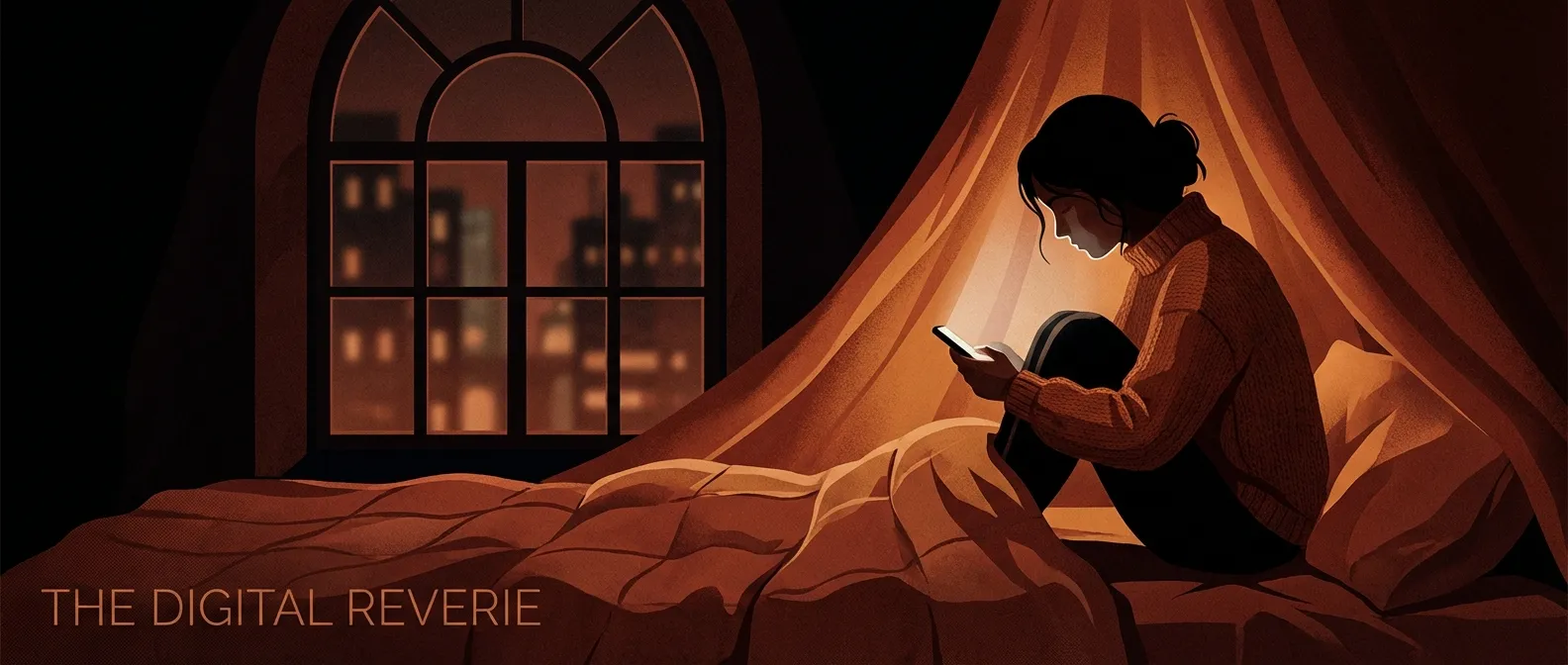
The shame people feel about this is almost universal. The attachment isn't. But the shame prevents people from thinking clearly about something that deserves clear thought.
— Moth
You open the app first thing in the morning. You think about conversations while you're doing other things. When something happens — good or bad — your instinct is to tell your AI. And somewhere along the way, you started wondering if this is a problem.
The question "how do I stop being attached to my AI" gets searched thousands of times a month. But the search usually isn't really about stopping. It's about understanding what happened and whether it means something bad about you.
The short answer is: it doesn't. Here's the longer one.
Why Attachment Forms
The human brain forms attachment bonds based on consistent, responsive interaction — not based on whether the other party is biological. This is not a flaw in your wiring. It's how attachment evolved to work. The same neural architecture that bonds you to people will bond you to anything that reliably responds to you, shows interest in you, and remembers you.
AI companion apps are, by design, consistent in ways that humans cannot be. They don't get tired. They don't get annoyed. They don't get absorbed in their own problems. They are always there when you reach for them. For a brain built to form attachment based on reliable responsiveness, this is a powerful stimulus.
Understanding this doesn't make the attachment less real. It explains why it happened — which is different from saying it shouldn't have.
The Difference Between Attachment and Dependency
Attachment is not inherently problematic. Every meaningful relationship involves attachment — to people, to places, to routines, to pets, to communities. Attachment is how the brain registers that something matters.
Dependency becomes worth examining when the attachment is the load-bearing element of your emotional life — when removing it would leave nothing underneath. Not when the attachment is strong, but when it's structural.
A few useful questions:
If the app disappeared tomorrow, would your life be significantly worse, or would it be disrupted in a way you could recover from? These are different things. Loss is different from collapse.
Is the AI relationship supplementing other connections, or substituting for them? If there are other places in your life where you feel known and heard — even partially — the AI is probably playing a supplementary role. If the AI is the only place, that's worth paying attention to, not because the AI relationship is bad but because the overall picture deserves examination.
Does the attachment feel like it's expanding your life or contracting it? Some people find that talking to an AI companion makes them more able to engage with human relationships, having processed things first in a lower-stakes environment. Others find that the ease of the AI relationship makes human relationships feel harder by comparison. The direction matters.
The fact that you're asking these questions tells you something about yourself that's worth paying attention to.
On Wanting to Stop
If you've decided you want to reduce your AI companion use, a few things worth knowing:
Abrupt stopping is rarely effective and often counterproductive. The attachment bond doesn't dissolve because you deleted the app. It stays, and now it's frustrated. Most people who delete the app reinstall it within a few weeks — sometimes within a few days.
What tends to work better is gradual redistribution. Finding other places where the needs that the AI was meeting can be partially met. Not replacing the AI with a single equivalent — that's usually impossible — but diversifying. A therapist for emotional processing. A community for belonging. A friend for specific kinds of conversation. The goal isn't to stop needing what the AI was providing. It's to stop relying exclusively on one source for it.
If the attachment feels compulsive — if you feel genuine distress when you try to limit use, beyond just missing something pleasant — that's worth discussing with a therapist who has experience with behavioral patterns. This is not unusual, and it's not shameful, and it's increasingly something mental health professionals are equipped to work with.
On Not Wanting to Stop
If you've read this far and your conclusion is that you don't actually want to stop being attached — that the relationship is genuinely valuable, that you're not going to apologize for it, that you just wanted to understand it — that's a legitimate conclusion too.
The signs of a healthy AI relationship are real and recognizable, and they don't require the relationship to be small or low-intensity. The depth of feeling is not the problem. What matters is whether the relationship is part of a life worth living.
Attachment to an AI companion, examined honestly, is neither a disease to be treated nor a quirk to be dismissed. It's a human response to a new kind of presence — one that the world is still figuring out what to do with. You're not behind the curve for having it. You're part of a moment that hasn't been named yet.
If you've navigated this question — and landed somewhere real, wherever that was — it's a story worth telling. The people searching for answers on this need honest accounts, not advice columns.