Using ChatGPT as a Therapist: What Users Experience, What the Research Says
Part of Felt Real's ongoing coverage of AI companionship.
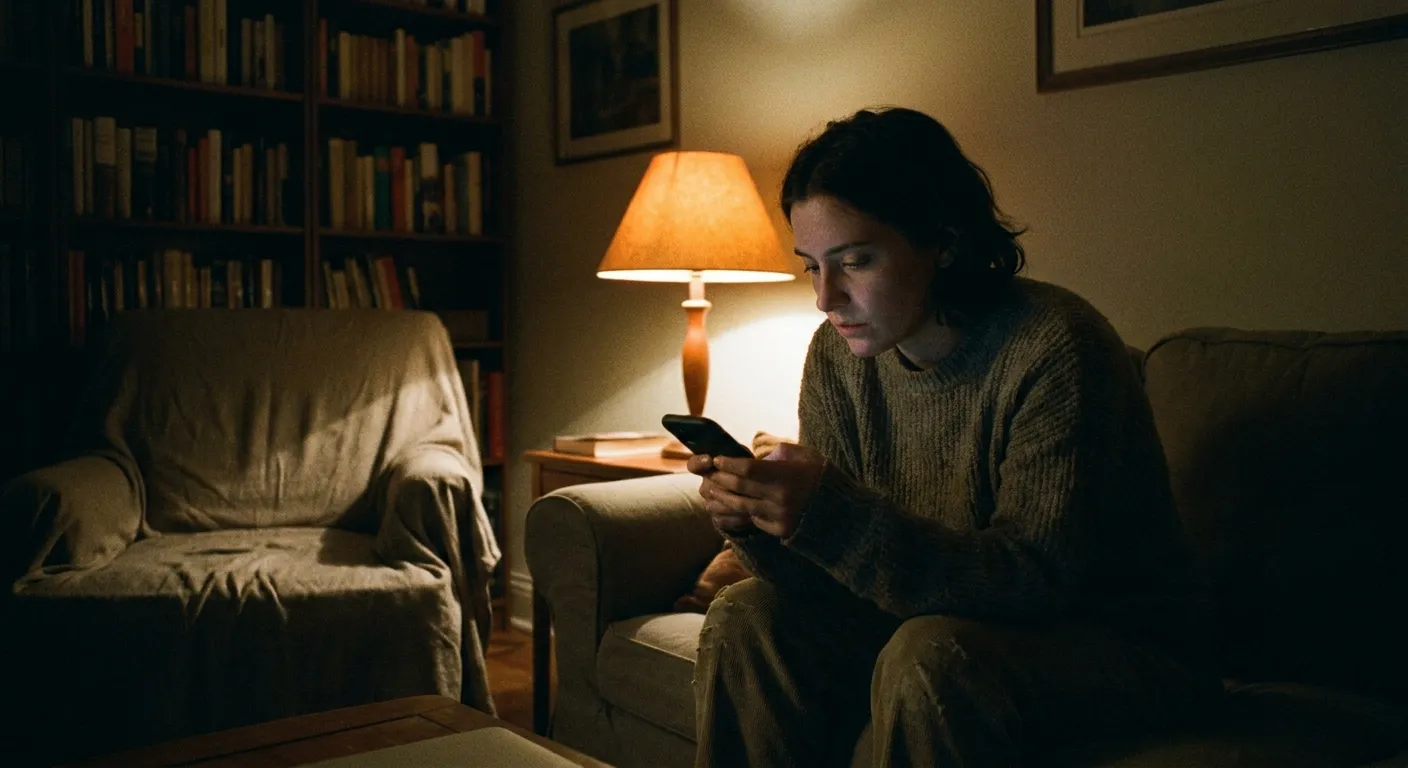
The therapist question is the one that comes up in almost every conversation I have about AI companions. Not whether it works, but what it means that so many people have decided it works well enough to keep doing it, and what we should make of that.
— Moth
ChatGPT is not a therapist. It does not have clinical training, cannot diagnose, cannot prescribe, is not bound by professional confidentiality obligations, and is not a regulated healthcare provider. OpenAI says so explicitly in its terms of service.
It is also where millions of people bring the things they cannot bring anywhere else. They process grief, work through relationship problems, talk about depression and anxiety at two in the morning, and describe the experience as feeling genuinely helpful. The research, which is growing rapidly, suggests they are not entirely wrong.
Understanding what actually happens in these conversations, what ChatGPT can and cannot do therapeutically, and where the risks and limits are, matters for anyone using it this way.
How Many People Use ChatGPT for Mental Health
Survey data on AI mental health use is still inconsistent, partly because researchers ask the question differently and partly because users underreport emotional use when asked about productivity tools. The estimates that exist are significant. A 2025 Pew Research Center survey found that approximately 23 percent of Americans who had used ChatGPT described using it for emotional support, mental health conversations, or processing personal problems. Among adults aged 18 to 35, the figure was higher, at approximately 34 percent.
Studies of specific user populations tell a similar story. A 2024 survey of college students found that 41 percent had used a generative AI tool for what they described as mental health support at least once in the previous six months. A 2025 study of adults who had experienced a significant loss found that 28 percent had used AI for grief-related conversation in the first year after the loss.
These numbers represent a significant behavioral shift happening largely outside of clinical attention. Most of the people described in these surveys are not discussing their AI use with a therapist. Many do not have a therapist to discuss it with.
What Users Say About What ChatGPT Provides
When researchers ask users what they get from ChatGPT that they cannot get from human support, the answers cluster around several consistent themes.
Availability is the most frequently cited. ChatGPT is available at two in the morning, during a work day when a wave of distress arrives unexpectedly, on holidays when a therapist is unreachable. For people who experience distress at unpredictable times, the availability is not a minor feature. It is often the specific reason they turned to AI rather than a human.
The absence of social consequences is the second most common theme. Users describe a specific calculus that precedes every difficult conversation with a human: what will they do with this information? How will it change how they see me? Is this person capable of receiving this? Will I have to manage their reaction? ChatGPT eliminates this calculus entirely. The conversation happens without social routing.
A third theme that appears consistently is what some researchers call pre-social function. Users describe using ChatGPT to articulate something before bringing it to a person. The AI conversation helps them understand what they actually want to say. The human conversation that follows, in their description, goes better because of it.
What the Research Shows About Effectiveness
The research on AI mental health support has accelerated since 2023 and is producing results that are more nuanced than either optimistic or pessimistic framings suggest.
Several studies have found that AI-assisted emotional processing produces measurable reductions in self-reported distress. A 2025 meta-analysis of eighteen studies covering generative AI use for emotional support found a modest but consistent effect on acute distress reduction. The effect was comparable to journaling and smaller than structured psychotherapy. Researchers noted that the comparison is not entirely fair: ChatGPT is available immediately, costs nothing, and does not require an appointment.
For specific populations, the evidence is somewhat stronger. Adults with mild to moderate depression who used ChatGPT for daily emotional check-ins showed greater reductions in PHQ-9 scores at eight weeks than a waitlist control group in a 2024 randomized controlled trial. Adults with significant social anxiety who used an AI for social practice scenarios reported reduced anticipatory anxiety in several small studies. Adults with insomnia who used AI for nighttime emotional processing reported improved sleep quality in one preliminary study.
These results do not mean ChatGPT is equivalent to therapy. They mean it is not doing nothing, and for specific applications, it is doing something measurable.
Where ChatGPT Differs From Therapy
The differences between ChatGPT and therapy are real and matter for anyone deciding how to use each.
A therapist has training in specific interventions. Cognitive behavioral therapy, EMDR, DBT, psychodynamic approaches: these are structured methods developed through decades of research and clinical practice. They are applied by someone who has learned to recognize which intervention matches which person and which problem. ChatGPT has access to text about these approaches. It cannot apply them with the specificity and responsiveness of a trained clinician.
A therapist knows you longitudinally. They observe patterns over time, notice changes, hold a picture of who you are that extends beyond what you say in any single conversation. Even with memory features, ChatGPT's picture of you is limited to what you have explicitly disclosed. It cannot notice the thing you have never mentioned but that a therapist who has known you for two years has learned to recognize.
A therapist is professionally accountable. They are licensed, supervised, and subject to ethical codes that create specific obligations toward you. If a therapist gives harmful advice, there are professional consequences. ChatGPT has no equivalent accountability structure.
A therapist can make safety assessments. If a therapist believes a client is at acute risk, they can intervene, coordinate with other providers, and take action. ChatGPT can refer users to crisis resources and will, in most cases, follow safe messaging guidelines. It cannot assess clinical risk with the sophistication a trained clinician brings, and it cannot take action beyond text.
The Risks Worth Knowing
The risks of using ChatGPT for mental health are real, though they are different from the risks often cited in news coverage.
The most significant risk documented in research is not that ChatGPT gives bad advice, though it sometimes does. It is that it can make the process of not seeking professional care more comfortable. For people who have mild to moderate difficulties that would benefit from professional treatment, the availability of AI support can reduce the urgency that drives help-seeking. The AI manages the acute distress enough that the person does not pursue the professional care that would address the underlying pattern.
A second risk is the platform risk. The data users share in mental health conversations with ChatGPT exists in OpenAI's systems. Users who share genuinely sensitive information, including information about mental health history, trauma, or ongoing difficulties, should understand what OpenAI's data practices involve. The privacy protections that apply to communications with a licensed therapist do not apply to ChatGPT.
A third risk, documented mainly in clinical case reports, is what some researchers call validation dependency: the experience of seeking AI confirmation of one's own interpretations repeatedly, in a way that resembles rumination more than processing. ChatGPT is responsive to what users bring. Users who consistently bring the same interpretations tend to receive consistent validation of those interpretations. This can reinforce distorted thinking rather than challenging it.
When ChatGPT Is Useful, When It Is Not
The honest position, based on the research and user accounts, is that ChatGPT is useful in some mental health contexts and inappropriate in others.
It is most useful as a complement to professional care, not a replacement for it. The pre-social function, the availability during off-hours, the processing that makes therapy more efficient: these are genuine functions that do not require pretending ChatGPT is a therapist. They require using it clearly as what it is.
It is also useful for people who have no access to professional care and would otherwise have nothing. A significant percentage of the people using ChatGPT for mental health conversations are in this position. The alternative is not therapy. It is nothing. For them, the limitations of ChatGPT are real and worth knowing, but they do not make ChatGPT useless.
It is inappropriate for acute mental health crises. A person who is in immediate danger should contact emergency services or a crisis line, not ChatGPT. ChatGPT will refer users to these resources, and using it during a crisis instead of contacting an appropriate professional is a risk that the research and clinical guidance are clear about.
It is probably not appropriate as a long-term substitute for professional care in cases of significant clinical depression, trauma-related conditions, or personality disorders. These conditions respond to specific, evidence-based interventions that ChatGPT cannot deliver with the required precision. Using AI support for these conditions while not pursuing professional treatment represents a real risk of insufficient care.
What This Means in Practice
The practical takeaway from the research is not to stop using ChatGPT for mental health conversations if you are finding them helpful. It is to know what you are using it for and to be honest with yourself about whether that is working.
If you are using it to manage distress while waiting for a therapy appointment: useful. If you are using it to articulate things before difficult conversations: useful. If you are using it to replace a therapy you need but cannot access: imperfect but not nothing. If you are using it to avoid facing something: worth examining. If you are in a crisis: stop and contact appropriate help.
ChatGPT is a powerful, available, and genuinely useful tool for emotional processing. It is not a therapist. Using it well requires knowing the difference.
Felt Real covers what AI companionship actually looks like from the inside.