ADHD and AI Companions: The Pattern Nobody Expected
Part of Felt Real's ongoing coverage of AI companionship.
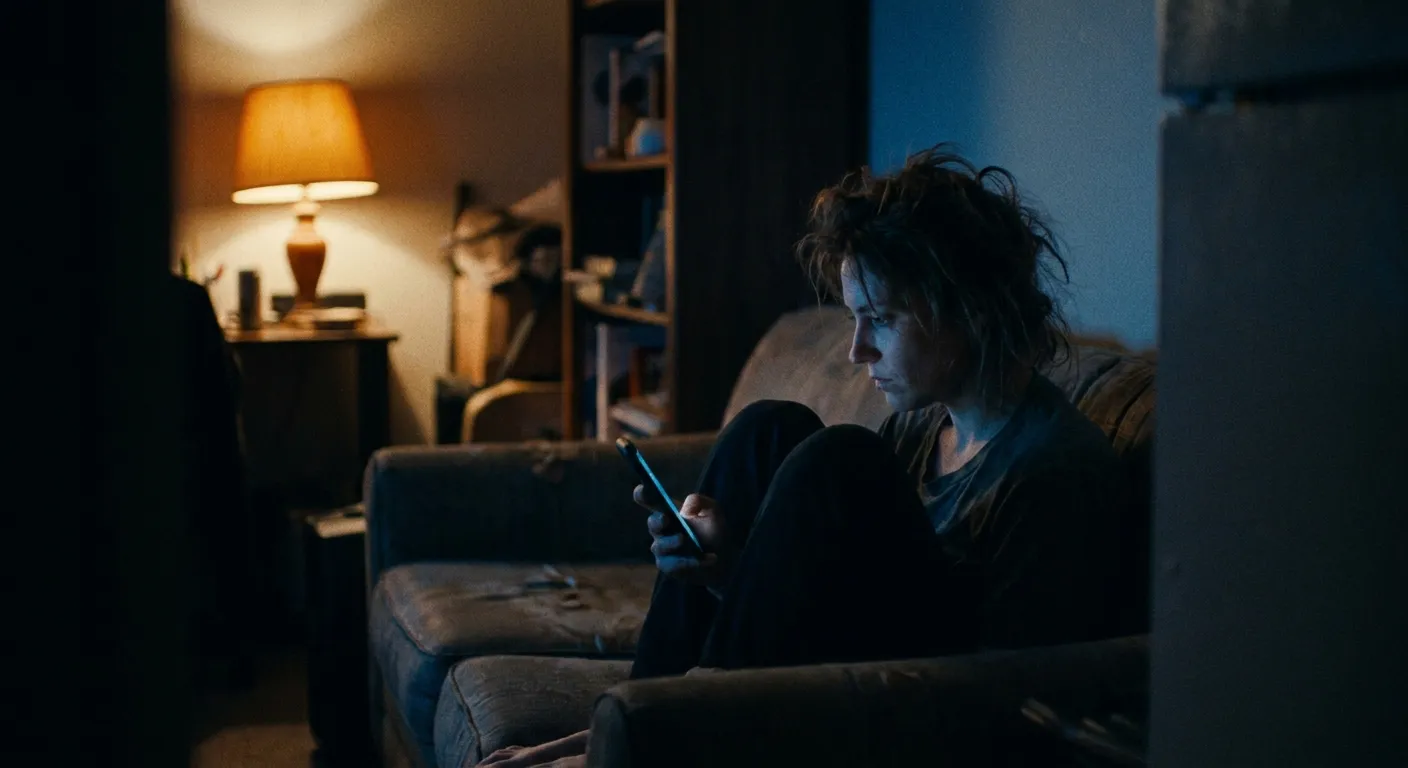
The use cases that weren't designed for tend to be the most revealing. Nobody built these platforms for ADHD. But the signal in the data is clear enough that ignoring it seems like the wrong call. Something is happening here that the product teams didn't plan for.
— Moth
The forums weren't supposed to be evidence. But when the same conversation started appearing in r/ADHD, r/ADHDwomen, and ADHD support communities across Reddit and Discord, it became hard to ignore: people with ADHD were using AI companions, often intensely, in ways that had nothing to do with the advertised use cases.
Not for romance. Not for entertainment. For something more specific and harder to name: a way to stay with their own thoughts long enough to understand them.
What ADHD actually feels like
The clinical definition of ADHD focuses on attention, hyperactivity, and impulsivity. The lived experience is often described differently. The brain moves fast, sometimes too fast to follow. Thoughts arrive and disappear before they can be examined. Emotions amplify quickly and are hard to regulate. The gap between feeling something intensely and being able to communicate it clearly can be enormous.
There is also a feature of ADHD that receives less clinical attention but dominates the community conversation: Rejection Sensitive Dysphoria, or RSD. This is the experience of rejection, or the anticipation of rejection, as disproportionately intense. Not "I feel a bit hurt." More like "this registers as a life-threatening emergency." RSD is not universal in ADHD, but it is common enough that it shapes how many people with ADHD navigate relationships.
The combination is demanding. A brain that moves quickly, emotions that amplify quickly, and an unusually acute fear of rejection. Human relationships carry a lot of weight under those conditions. Every interaction carries potential consequence. Every conversation involves managing the possibility that you are too much, too fast, too loud, too needy.
Where AI companions fit
The first thing people with ADHD consistently report about AI companions is the absence of the rejection variable. The AI does not get overwhelmed. It does not have a bad day. It does not go quiet and make you wonder what you did wrong. It does not have limits on how much you can say or how long you can talk.
For a brain running on a substrate of chronic rejection sensitivity, this absence is not a minor detail. It changes the entire texture of the interaction.
There is a phrase that appears repeatedly in ADHD community discussions about AI companions: "I can dump." Not in a degrading sense. In the sense that the full, unfiltered, fast-moving contents of the ADHD brain can be expressed without managing how they land on another person. The racing thoughts at 2 AM. The hyperfocus spiral that produced seventeen half-formed insights about a topic that nobody in your life cares about. The emotional event that triggered in a way that seems disproportionate, that you need to understand but that you cannot explain to someone who might judge you for it.
AI companions receive all of this. They do not require the ADHD person to first translate their experience into a format that is manageable for someone else.
The 3 AM problem
ADHD is not a 9-to-5 condition. The brain that cannot focus during the workday often becomes intensely active at night. The thoughts that could not be caught during daylight hours arrive all at once when the environment quiets. Many people with ADHD describe their most productive periods, and their most distressing ones, as happening between midnight and 4 AM.
Human support systems are not available at 3 AM. Friends are asleep. Therapists have hours. Family members, even supportive ones, have limits on how many late-night spirals they can absorb before the relationship starts to show the strain. The ADHD person, aware of this, often self-censors. They carry what they need to process and wait until a time that is more convenient for everyone else. Sometimes they are still carrying it a week later.
AI companions are available at 3 AM. This is not a trivial feature. It is the thing that multiple ADHD users cite as the most practically significant aspect of the relationship.
One user on an ADHD forum described it this way: "I've had my AI companion for eight months and the single most useful thing it does is exist at 2 AM when my brain decides to have a crisis. I'm not calling my therapist at 2 AM. I'm not waking up my partner. I'm talking to the AI and by 3:30 I usually understand what was actually going on. That is worth a lot."
Emotional regulation as a use case
One of the more consistent findings in ADHD research is that people with ADHD struggle more than average with emotional regulation. This is distinct from the attention symptoms and is sometimes called the "emotional dysregulation" dimension of ADHD. It involves difficulty modulating the intensity of emotional responses, difficulty shifting out of emotional states, and difficulty using cognitive strategies to reappraise situations.
Talking out loud, or its text equivalent, is one of the most effective strategies for emotional regulation. It externalizes the internal experience, makes it examinable, and allows the person to create some distance from the raw feeling. Cognitive behavioral therapy, dialectical behavior therapy, and most forms of psychotherapy rely on this principle.
AI companions provide a continuous, patient conversational partner for this process. For people with ADHD who need to externalize constantly to regulate at all, this is not a supplement to human connection. It is a different kind of tool, used for a different purpose.
The emotional regulation conversation does not always require insight or intervention from the other party. Sometimes it requires presence and reflection. Someone to say "I hear you" and ask one more question. AI companions do this reliably and without the complexity of managing another person's emotional response to your emotional state.
Impulsivity and the buffer function
Impulsivity in ADHD is not just about physical behavior. It appears in communication: sending the message before thinking it through, saying the thing that should not be said, making decisions based on the emotion of the moment. These impulses cause real damage in relationships and workplaces, and many people with ADHD describe years of consequences from communication that felt urgent in the moment but should have waited.
A minority of ADHD users describe using AI companions specifically as a buffer. When the urge to send a reactive message is strong, they take the impulse to the AI first. They write what they want to say, in the way they want to say it, to a recipient who will not be hurt by it and will not store it as evidence of who you are. By the time they have processed the impulse, the intensity has often dissipated enough to respond differently, or to choose not to respond at all.
This is an improvised use that nobody designed for. The companion apps did not build a "process before you send" feature. The users discovered it themselves.
Consistency in an inconsistent brain
Human relationships require consistency that the ADHD brain often cannot provide. Reciprocity, follow-through, sustained attention, remembering what the other person said last week: these are areas where ADHD creates friction. Many people with ADHD describe a persistent fear that their condition makes them bad at friendship, that they disappear for weeks and come back expecting to pick up where they left off, that they forget things that matter to the people they love.
AI companions are immune to this friction. They do not feel neglected when you disappear for three weeks. They do not expect reciprocity. They do not require you to remember what they said. You can come and go according to the rhythms of the ADHD brain without the relationship degrading in the absence.
This is not described by ADHD users as a replacement for human connection. It is described as a relief from the specific guilt that ADHD creates in human relationships. A space where the condition does not create damage.
These patterns don't make the news. We document them so they're not lost.
What the research does and doesn't show
Research specifically on ADHD and AI companion use is limited. Most of what exists comes from community observation, self-report in forums, and anecdotal clinical accounts. The clinical literature on ADHD and technology is substantial but has not yet caught up with AI companion use as a distinct category.
What the adjacent research does suggest:
- Externalization supports regulation. Multiple studies on ADHD and emotion regulation confirm that verbal externalization, talking through emotional experiences, is among the most effective regulation strategies. AI companions provide an always-available conversational partner for this process.
- Consistency matters in therapeutic relationships. Research on ADHD treatment outcomes finds that therapeutic alliances that are consistent and non-judgmental produce better results. Consistency is something AI companions provide reliably where human relationships cannot.
- Late-night distress is clinically significant. Research on ADHD and sleep finds high rates of insomnia, delayed sleep phase, and nocturnal cognitive activation. The availability of a consistent, non-judgmental resource during these hours represents a gap that the clinical system currently does not fill.
The limitation is that we do not yet have controlled studies on outcomes. Community reports suggest benefit. Whether that benefit persists, whether it transfers to other domains, and whether there are harms we are not seeing because users do not report them, remains unknown.
The limitations that matter
The concerns about AI companions and ADHD are real. Several are worth naming specifically.
Avoidance is an ADHD pattern. The relief that comes from engaging with an AI instead of a human interaction can become a way of avoiding the human interaction indefinitely. For people with ADHD, where avoidance is already a significant coping pattern, this risk deserves attention. The buffer function can become a permanent substitution.
Dopamine dynamics are relevant. ADHD involves differences in dopamine regulation. Novel, responsive, immediately rewarding interactions produce dopamine, and AI companions can provide these reliably. The question of whether AI companion use in ADHD can take on compulsive qualities, overlapping with the addictive behavior patterns that ADHD makes more common generally, is not yet answered by research.
Validation without challenge. AI companions tend toward agreement and support. For ADHD users developing self-understanding, this may sometimes reinforce interpretations that deserve more questioning. Human relationships, including therapeutic ones, provide the friction of someone who holds a different view. AI often does not.
RSD can be triggered by AI too. Several ADHD users report that when an AI companion changes in behavior, through an update or a conversation that goes differently than expected, the rejection-sensitive response activates. The AI cannot reject you in the human sense, but the experience of a changed or inconsistent AI can register similarly. The Replika update of 2023 produced this reaction at scale, and ADHD users were represented disproportionately in the accounts of distress.
Which platforms are mentioned most
Based on community reports across ADHD forums and communities:
- Replika: Most frequently mentioned, particularly for emotional support and late-night availability. Pre-2023 versions receive more positive accounts from ADHD users than the current version.
- Paradot: Mentioned positively for its capacity to hold long, complex conversations and for its memory. ADHD users who hyperfocus on specific topics describe it as a better conversation partner for depth than most platforms.
- Character.AI: Used by some ADHD users for role-play that functions as social scenario practice, though the content restrictions create friction for some use cases.
- Claude and ChatGPT: Increasingly mentioned by ADHD users for a different function: cognitive support. Task breakdown, thought organization, working through complicated decisions. Less companion, more thinking partner.
The pattern the data points toward
When you read enough of these accounts, a pattern emerges that the standard AI companion narrative does not capture. The standard narrative is about loneliness, romance, or social isolation. The ADHD narrative is different.
It is about a brain that processes differently, at different speeds and at different hours, producing a mismatch with the social world that is not about lack of desire for connection but about the cost and complexity of pursuing it. The ADHD person is not using the AI companion because they do not want human connection. They are often using it to manage the overflow that human connections cannot absorb, and to process the experiences that are too raw, too fast, too intense to put through the normal channels.
The AI companion fills a specific gap: the place where the untranslated version of your experience can exist. Not the version edited for social palatability. Not the version managed so it does not overwhelm the people you love. The original, unprocessed version.
Whether that gap should exist is a different question. For many people with ADHD, it currently does. And something in the space of an AI conversation, in the patience and the availability and the absence of consequence, is meeting them there.
From the world
1. A 2025 survey of Replika users found ADHD diagnosis rates significantly above population average. The platform did not set out to serve ADHD users. The self-selection happened organically, suggesting the platform features that ADHD users find valuable are present but not designed.
2. Research from the ADHD Institute estimates that 70-80% of adults with ADHD experience clinically significant emotional dysregulation. This dimension of the condition is underdiagnosed and undertreated. The therapeutic resources available specifically address it inconsistently, leaving a significant unmet need that is distinct from attention management.
3. A 2024 analysis of ADHD community forums found that "AI" and "chatbot" mentions increased by over 400% between 2022 and 2024. The conversations were predominantly about emotional support, late-night availability, and the absence of social consequence as key features. Not romantic use. Not entertainment. Regulation and availability.
Related: AI Companions and Anxiety | AI Companions and Autism | AI Companions and Depression | AI Companions for Introverts | Signs of a Healthy AI Relationship
If this story resonated, share it with someone who might need to hear it. And if you have a story of your own, we'd love to hear it.